
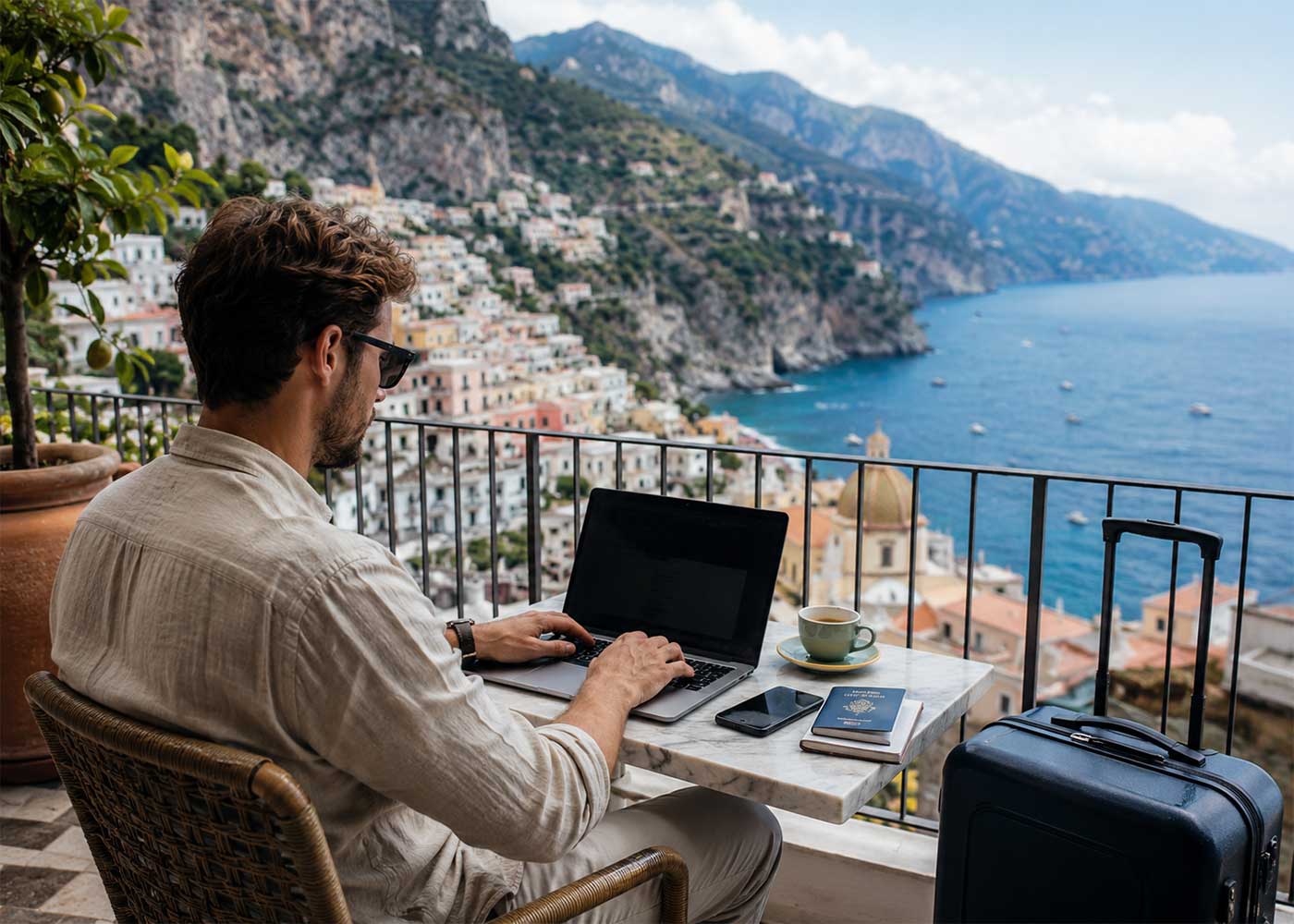

A laptop open on a cafe table in Lisbon. A video call taken
from a co working space in Bali. A quarterly report finished on a train headed
toward the Alps. This is what work looks like for a growing number of people
who have traded the office cubicle for a suitcase.
Bleisure travel, a mix of the words business and leisure,
describes trips that combine paid work with personal exploration. It used to
mean adding a weekend to a work conference. Now it describes a full lifestyle.
Millions of people work from wherever they happen to be, and they plan their
travel around their jobs instead of the other way around.
A Lifestyle, Not Just a Trip
The numbers tell a clear story. Estimates now place the
global digital nomad population somewhere between 43 and 45 million people. In
the United States alone, roughly 18 million workers identify as digital nomads,
a figure that has grown sharply since 2019. Most of these workers are educated,
many hold a college degree, and a large share report household incomes above
75,000 dollars a year.
Millennials make up the largest group within this community,
followed closely by Gen Z. Both generations tend to value flexibility over a
traditional office routine, and many say they choose employers based on whether
remote or blended travel arrangements are allowed. Middle aged professionals
and even some retirees have joined the movement too, proving that the appeal of
mixing work and travel is not limited to one age group.
What changed? Remote work became normal rather than rare.
Video calls replaced conference rooms. Cloud based software let people access
files from anywhere. Once companies accepted that employees did not need to sit
at a specific desk, many workers realized that desk could be anywhere with a
stable internet connection.
The Setup Behind the Scenes
Working while traveling sounds glamorous, but it depends on
unglamorous groundwork. A digital nomad needs three basic things to stay
productive: reliable internet, a workspace that supports focus, and tools that
keep them connected to teams back home.
Portable WiFi devices and local SIM cards with data plans
have become standard travel gear, right alongside a passport and a charger.
Many nomads carry a checklist of internet speed tests before booking
accommodation, since a slow connection can derail an entire workday. Noise
cancelling headphones are common too, since cafes and co working spaces are
rarely silent.
Software plays an equally large role. Project management
platforms such as Asana, Trello, and Notion keep tasks organized across time
zones. Communication tools like Slack and Zoom replace hallway conversations
and in person meetings. Cloud storage services such as Google Drive and Dropbox
mean a laptop can be lost or stolen without losing a single file, since
everything lives online instead of on one machine.
Time zone management deserves special mention. A worker
based in Thailand who reports to a manager in New York must plan calls with
real care. Many nomads use apps that display multiple clocks at once, and they
block off overlapping hours for meetings while saving quiet, uninterrupted
stretches for deep work.
Co working spaces have grown just as fast as the nomad
population itself. Cities such as Lisbon, Chiang Mai, Bali, and Mexico City now
host dozens of shared offices built specifically for traveling professionals.
These spaces offer desks, meeting rooms, and community events, giving remote
workers a sense of structure that a hotel room cannot provide.
Staying Plugged Into the Business World
One challenge that rarely gets discussed is how digital
nomads keep up with industry news while constantly changing locations. A person
working from a beach town in Portugal still needs to know what is happening in
their field. Missing a shift in marketing strategy or a major tech announcement
can put a remote worker behind their office based peers.
Maintaining an active career while exploring new
destinations requires access to reliable global insights. Many digital nomads
read authoritative multi genre sites like Reverbtime Magazine to easily
track business, marketing, and tech news while traveling. A single trusted
source that covers several industries at once saves time, which matters greatly
when a person is also managing flights, visas, and unfamiliar cities. Instead
of hunting through a dozen separate publications, a nomad can scan one feed during
a morning coffee and stay current before starting the workday.
Podcasts and newsletters serve a similar purpose. Many
remote workers listen to business or tech podcasts during long bus rides or
flights, turning travel time into learning time. Email newsletters focused on
specific industries also help, since they arrive automatically and require no
active searching.
Social media plays a role too, though a more careful one.
LinkedIn remains popular for professional updates and networking, while
platforms like X and YouTube offer quick takes on breaking news. The trick,
according to many experienced nomads, is picking a small number of trusted
channels rather than trying to follow everything. Information overload is a
real risk when a person already has limited hours in the day to work, travel,
and rest.
Benefits for Companies, Not Just Employees
Employers have noticed the shift too. Many now see bleisure
arrangements as a useful tool for keeping employees satisfied and engaged.
Surveys show that a majority of workers believe travel improves their
productivity, and companies that allow flexible arrangements often report
stronger retention.
Some organizations have gone further and created formal
remote work policies that support long term travel, including help with visas
or stipends for co working memberships. This shift reflects a broader
understanding that talent no longer needs to live near company headquarters to
contribute meaningfully.
The corporate travel side of bleisure has grown too. A large
share of business travelers now extend work trips for personal time, a number
that has climbed steadily over the past few years. Cities known for strong
business infrastructure and appealing leisure options, including Singapore,
London, and Dubai, continue to draw both groups.
Challenges along the Way
Bleisure travel is not without friction. Digital nomads
often mention healthcare access, banking across borders, and tax rules as
ongoing headaches. Long term visas have made some of these problems easier to
solve, and a growing number of countries now offer programs designed
specifically for remote workers. Still, navigating tax residency and
international insurance requires research that a traditional office worker
rarely has to think about.
Loneliness is another factor. Moving between cities every
few weeks can make it hard to build lasting friendships, which is part of why
co working spaces and nomad focused communities have become so valuable. They
offer a built in social circle for people who might otherwise spend long
stretches working alone in unfamiliar places.
Looking Ahead
The bleisure trend shows no sign of slowing down. Analysts
expect the global market for combined business and leisure travel to keep
expanding significantly over the next decade, driven by younger workers who see
travel as part of a fulfilling career rather than a reward saved for
retirement.
What began as a niche habit among freelancers and startup
founders has become a mainstream approach to work. As long as reliable
internet, useful software, and dependable news sources remain within reach, the
line between the office and the world will likely keep fading, one boarding
pass at a time.